What is the A380 waterproof electric pig prod?What is the difference between it and an ordinary pig-driving stick?
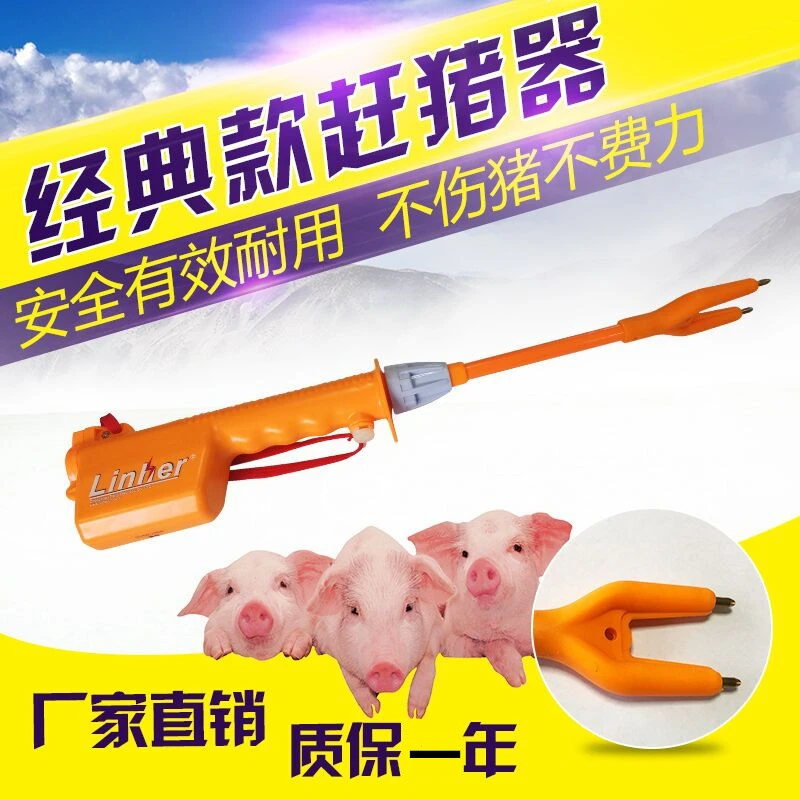
The A380 is a rechargeable electric pig prod under the Linher brand, featuring a waterproof body design, mainly used for driving livestock on farms and also suitable for household breeding scenarios. Its positioning is not to replace all traditional tools, but to provide an electrified, reusable option in wet environments, situations requiring one-handed operation, or where driving distance is a concern.
Rechargeable power supply and waterproof body: how does it work
Unlike pig-driving sticks that rely on manual swinging, the A380 generates its driving effect through rechargeable power; you need to check the battery before use and recharge it afterward, which determines its usage rhythm: it is suitable for pre-planned pen transfers, loading, and daily pen inspections, rather than being grabbed for immediate use. The value of the waterproof design is concentrated in wet environments—when washing pens with splashing water or working outdoors in the rain, whether the body can continue to operate normally directly determines whether it can be kept on standby at these posts. It should be noted that the specific protection rating corresponding to "waterproof" is not provided in the available information; before purchasing, you should confirm with the team whether it can withstand direct spraying during washing or only splashes, as this will affect which post you assign it to.
What are the core differences from ordinary pig-driving sticks and pig-driving boards?
Ordinary pig-driving sticks and pig-driving boards rely on physical blocking and tapping to guide pigs, do not depend on electricity, are low-cost and ready to use at hand, and remain reliable tools in dry pens and for short-distance guiding. The differences of the A380 are mainly reflected in three points: first, the power supply method brings a prerequisite for continuous use and requires charging management;second, the waterproof body allows it to enter wet scenarios such as washing and rainy days;third, it offers multiple rod lengths of 35cm / 56cm / 66cm / 82cm, which can be allocated according to the breeder's height and the width of the pen aisle, making the operating distance more flexible. The applicable objects are marked as including cattle, so daily driving in cattle barns can also be taken into consideration.
When choosing, there is no need to choose only one of the two: in dry environments and for temporary short-distance guiding, traditional tools are sufficient;only farms that frequently wash, work outdoors, or need to distribute different rod lengths by position are worth adding procurement and maintenance steps for electric and waterproof features. The next step is to confirm two things first: whether the water splash intensity in your scenario is within the device's waterproof capability, and which shaft length settings are needed for the positions you plan to equip. Once these two points are confirmed, then decide on the purchase quantity and shaft length combination.
When washing pens and driving livestock in the rain, to what extent can the A380 actually resist water?
The A380's waterproof design targets the most common wet conditions on livestock farms: splashes kicked up when washing pens, rainwater exposure when driving livestock in the rain, and short-term work on wet ground. Its value lies in keeping the device working normally in these scenarios and reducing water-ingress failures, not in turning the whole unit into a tool that can be submerged in water. Understanding this boundary is more important than remembering the word "waterproof."
It can handle splashing water and wet ground, but that does not mean the whole unit can be submerged or directly sprayed with a high-pressure water gun.
Whether a livestock driver gets water inside and breaks down when washing pig pens depends on how the water contacts the housing. When handled by hand, splashed by water, used briefly on wet and slippery ground, or used to drive livestock in open passages on rainy days, these are typical situations that the waterproof design must cover. However, the following three practices exceed its protection scope:
- Full immersion of the device: After falling into a sink or manure ditch and being soaked in water for a long time, this is not a scenario the waterproof design is meant to handle.
- Direct blasting with a high-pressure water gun: High-pressure water jets have strong impact force and can easily force water into gaps such as buttons, charging ports, and pole body connections. When routinely washing barns, direct spraying onto the device body should be avoided.
- Leaving it exposed to rain for a long time: Leaving the equipment out in the rain after work is finished is a different matter from brief exposure to rain during operation.
In other words, the waterproofing allows the A380 to "withstand on-site conditions," but it does not mean it is "immune to water no matter how it is used." During procurement, if the main use is frequent high-pressure washing of pens, the washing method and water gun usage habits should be taken into consideration together, and the Linher team should be consulted for usage recommendations under such working conditions.
Troubleshooting steps for daily waterproof use and inspection
Waterproof performance depends on design, and also on daily maintenance. It is recommended to form a habit by following these steps:
- Check the appearance before operation: Check whether the body shell, button area, and charging port cover have cracks or are loose, and whether the rod connection points are properly sealed.If damage is found, stop using it first.
- Control the direction of water flow during washing: When washing the pens, keep the water gun away from the body of the pig driver; drive the livestock first, then wash, or place the equipment where splashing water cannot reach it.
- Dry it promptly after exposure to rain: After working in rainy weather, wipe the body and the charging port area dry with a dry cloth; do not charge it directly while moisture remains.
- The charging port is a key point: Before charging, confirm that the interface is dry, and close the waterproof cover before using it in damp environments.
- Check the seals regularly: After a period of use, watch for aging of the seals at the charging port cover and the edges of the buttons; these are the locations where waterproofing performance is most likely to decline.
If there are already signs of water ingress during use (unresponsive buttons, abnormal charging), do not continue using it; contact the Linher team to confirm how to handle it.
Judging the boundaries: If your daily work mainly involves splashing water, driving livestock in the rain, and wet ground, the A380's waterproof design can cover these needs;if you are used to spraying the device directly with a high-pressure water gun, or often work in deep water areas, you need to first confirm the protection rating and usage limitations with the supplier before deciding whether it is suitable.
How to choose among the four rod lengths of 35cm/56cm/66cm/82cm?How can the rechargeable model be used without delaying moving animals between pens?
Longer rod length is not always better; the key depends on the animal's body size, the width of the pen passage, and the operator's height. The A380 offers four lengths: 35cm, 56cm, 66cm, and 82cm. Essentially, this turns the "safe distance between people and animals" into selectable ranges.
The logic of matching rod length with animal size, pen aisle width, and operator height
When pigs are the main animals and aisles are narrow, 35cm and 56cm are closer to the operation, suitable for short-distance guiding of piglets or at transfer gate openings;56cm is the compromise option for daily pig transfers in most pig farms. When cattle are included among the applicable animals, since the animals are large and move with wide motion, it is recommended to choose 66cm or 82cm for more reliable operating distance and personnel safety. Operator height also affects the choice: shorter individuals using 82cm for extended cattle driving will experience more noticeable wrist strain.
When distributing in batches, assign rod length tiers by job position to avoid mismatches caused by uniformly purchasing a single specification.
Daily management of rechargeable power supply: charging conditions and rotation use
Whether a rechargeable pig driving tool is convenient depends on the farm's charging conditions and the frequency of pig transfers. For high-frequency sorting areas, two units can be assigned per shift for rotation—one in use and one recharging—with the charging location positioned as close as possible to the sorting route. Parameters such as battery life, charging time, and battery capacity have not yet been confirmed; the rotation rhythm should be arranged only after verification with the manufacturer.
Should you choose the A380 waterproof electric pig driver for your farm or household scenario?
Here is the conclusion first:If your core need is "driving pigs and cattle in humid environments, with different rod lengths required for different pens and personnel," the A380 is worth adding to your procurement list;If you only occasionally drive a few pigs, your pens are dry, or you expect it to replace hard facilities such as fences and loading ramps, then you should not choose it.
Who should choose it, who should not, and where the budget boundaries lie
These three types of scenarios are recommended:
- Need to wash pens or work outdoors: The waterproof body design is what sets this product apart from ordinary pig driving tools; usability in damp environments directly affects whether you will need to repurchase.
- Moving pigs between pens and loading them onto trucks, and routine driving in cattle barns: When passages are narrow and pigs are easily startled, rod length determines the operating distance and safety margin; the four options of 35cm / 56cm / 66cm / 82cm exactly cover different job roles.
- Small-scale family farming: Rechargeable power supply, compact storage that takes up little space; just equip one unit according to the actual number of animals, and there is no need to pursue multiple rod lengths.
These two situations are not recommended:
- Dry pens where pigs are driven only a few times a year; the complexity brought by waterproofing and multiple rod lengths is unnecessary, and a simple solution is more cost-effective.
- Don't expect a single pig-driving tool to solve pen-transfer efficiency problems—passage design, loading ramp slope, and other hard conditions are outside its scope.
Budget boundaries: For farms that wash frequently or operate outdoors, prioritize budget on waterproofing and suitable rod length;When distributing in batches, assign rod length tiers by job position; do not uniformly purchase a single specification and cause mismatches;For family farming, one unit is enough; multiple rod length options are a waste.
4 questions to confirm before buying and next-step consultation suggestions
- Is your main working environment humid for long periods? Washing frequency and whether the work is outdoors determine whether waterproofing is an absolute necessity.
- Is the main target for herding pigs or cattle, and what is the weight range? The applicable targets include cattle, but different body sizes require different operating distances.
- What are the operator's height and the width of the barn aisle? This directly determines which of the 35cm to 82cm options to choose, and distribution to multiple positions must be confirmed separately.
- Do you need one unit for trial or bulk distribution? Bulk distribution involves rod length combinations, and the position allocation plan needs to be communicated with the Tianji team in advance.
Prepare the answers to these four questions, then contact the Tianji team to confirm the rod length configuration and purchase quantity; this saves more cost than ordering first and trying and erroring later.
Frequently Asked Questions
Q: I only raise a few pigs at home. Is the shortest 35cm one enough? A: It depends on your operating habits and the width of the pen aisle. A rod that is too short means the distance between you and the pig is close, and when the pig is easily startled, the safety margin is insufficient;It is recommended that you tell the Tianji team the aisle width and your height before deciding on the model.
Q: Can the waterproof design withstand direct washing with water? A: The product information only states that the body has a waterproof design. The specific washing methods it can withstand need to be confirmed with the Tianji team. Do not assume that the whole unit can be soaked or directly sprayed at high pressure.
Q: Can it also be used on cattle? A: The applicable subjects include cattle, but the strength and reactions of cattle differ from those of pigs. When choosing the rod length, a larger operating distance should be left, and it is recommended to confirm separately.
Q: Can different handle lengths be mixed in bulk purchases? A: The four handle length options are designed for different roles. Whether mixing is feasible and the minimum order quantity need to be discussed and confirmed with the Tianji team.
Learn more
If you are choosing a pig driving tool for washing pens or driving livestock on rainy days, you can first organize the width of the pen aisles, the main animals to be driven, and the height of the operators, then contact the Tianji team. We will help match the handle length combination and purchase quantity according to your actual working conditions.